
Pearce Hostel, Trinity College
Decarbonisation retrofit of student accommodation within a city centre location
Client: Trinity College
Status: Under Construction
OVERVIEW
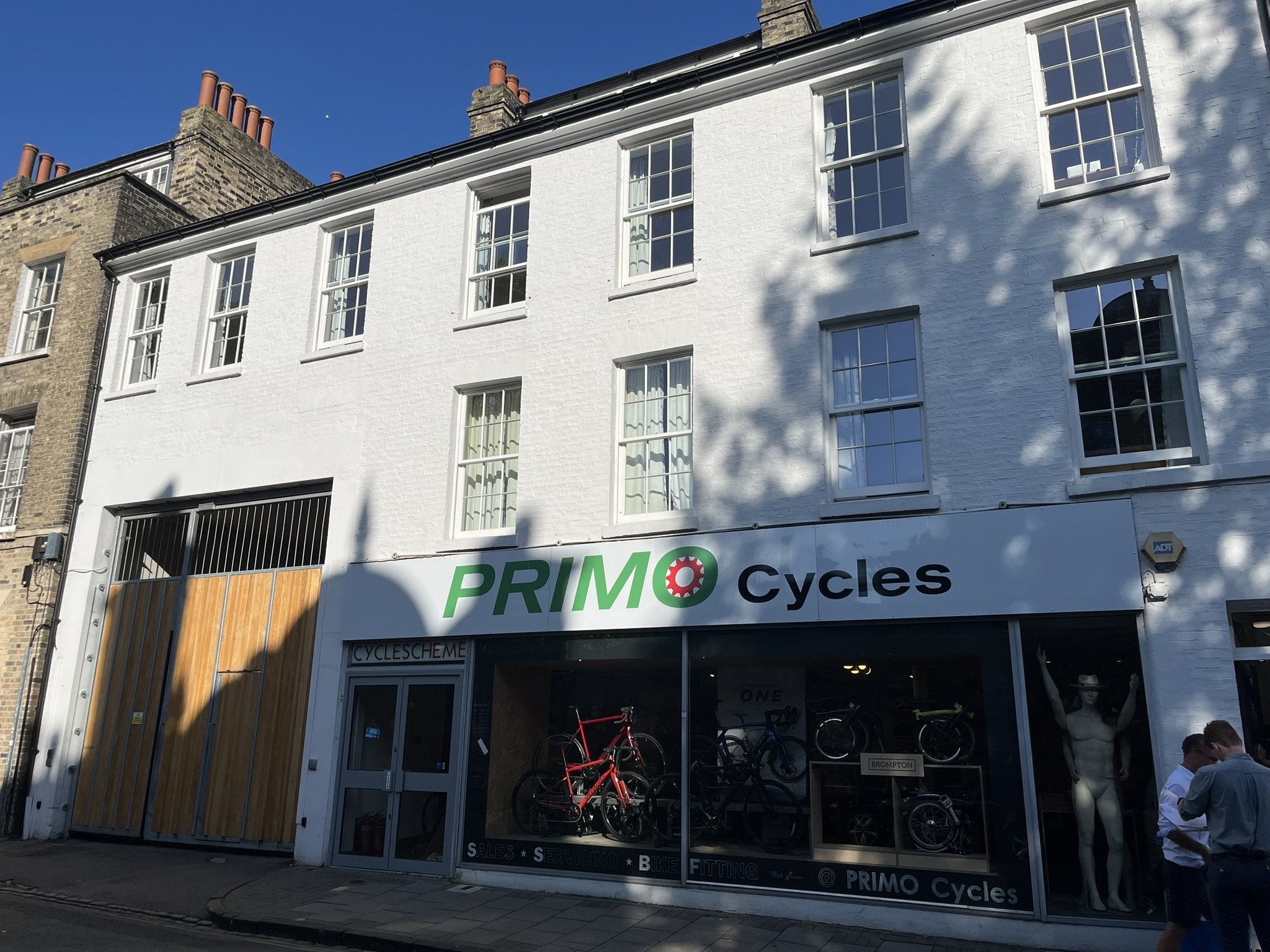
Trinity College, Cambridge, is progressing with its commitment to decarbonise its operational estate, translating strategic planning into practical, technically robust retrofit solutions that support its broader sustainability goals. JGC worked with the college to develop an initial decarbonisation plan for its Pearce Hostel site in central Cambridge. Following stakeholder agreement, the initial decarbonisation plan was developed through to RIBA Stage 4 technical design, with the scheme now under construction.
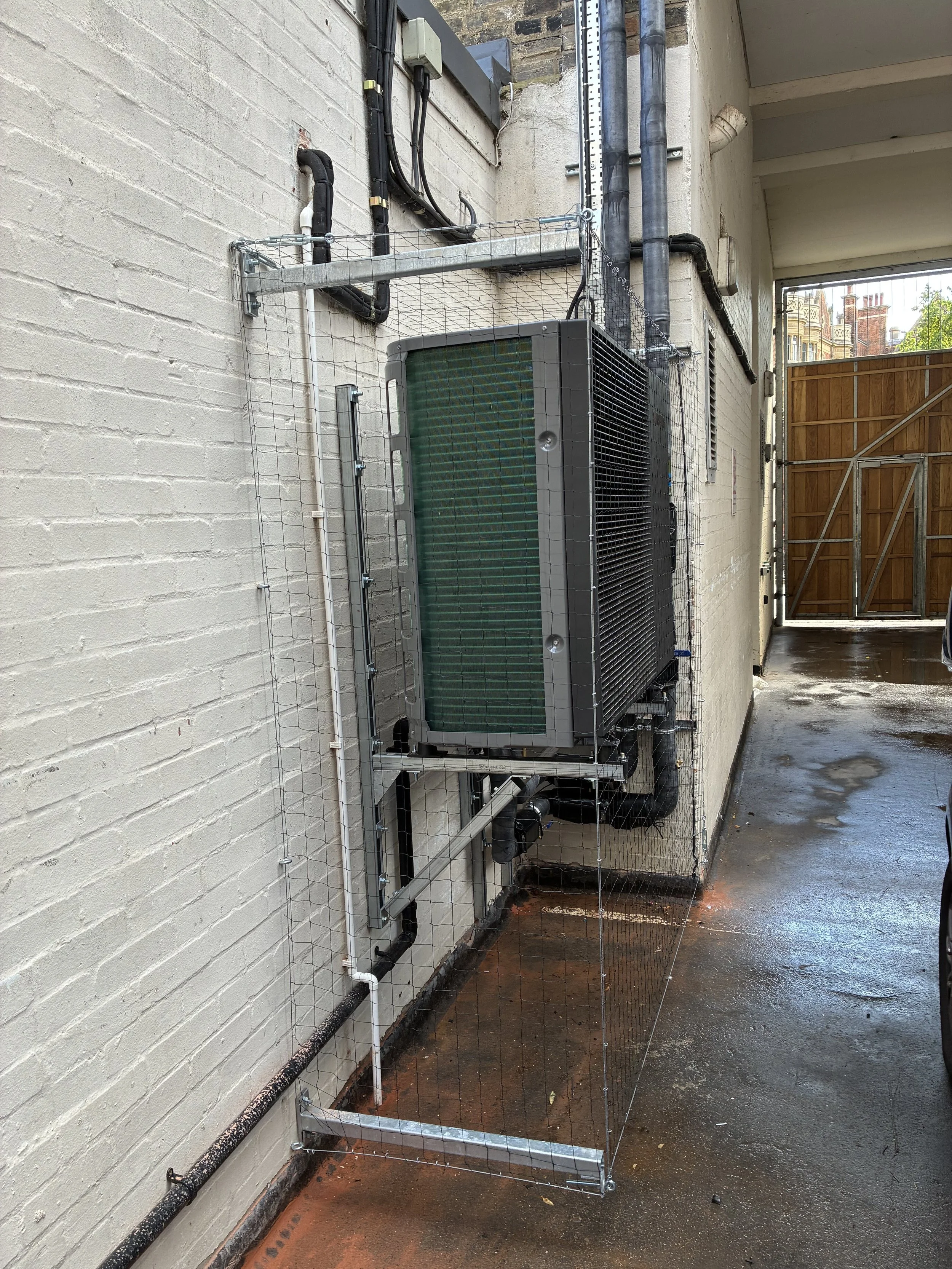
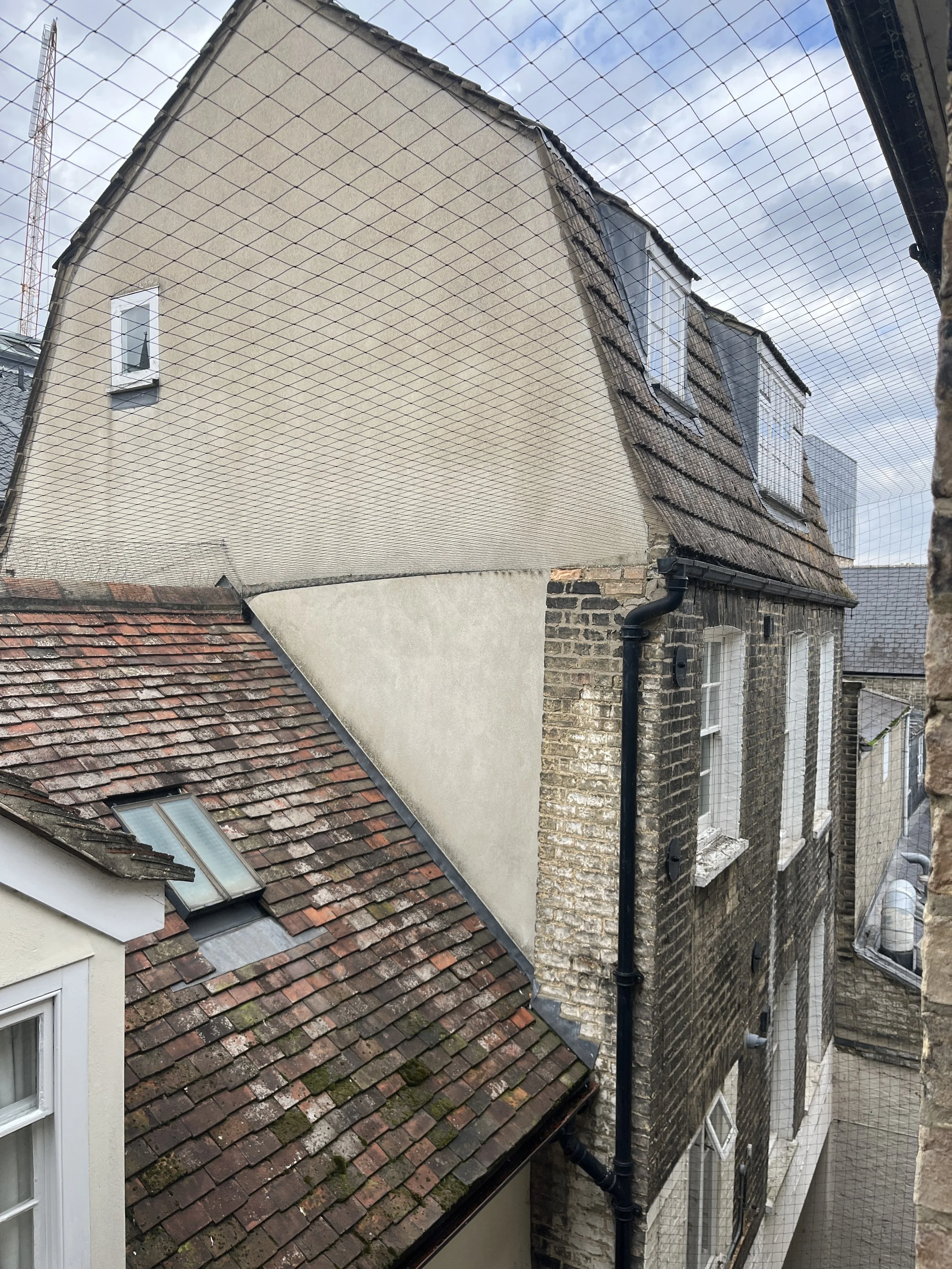
Pearce Hostel comprises a mix of buildings constructed from the 1700s to the early 1900s (with potential older medieval cores), some of which have recently been modified internally to provide student accommodation. There are several shops and restaurants, each with its own MEP equipment, on the ground floor along the street-facing sides, leading to a utilitarian back-of-house area on the non-street-facing side. The resulting six hostel buildings provide student accommodation within a highly constrained urban environment. These buildings, having undergone various refurbishments over time, present unique challenges for retrofit projects, with limited external space and access and close proximity to neighbouring properties.
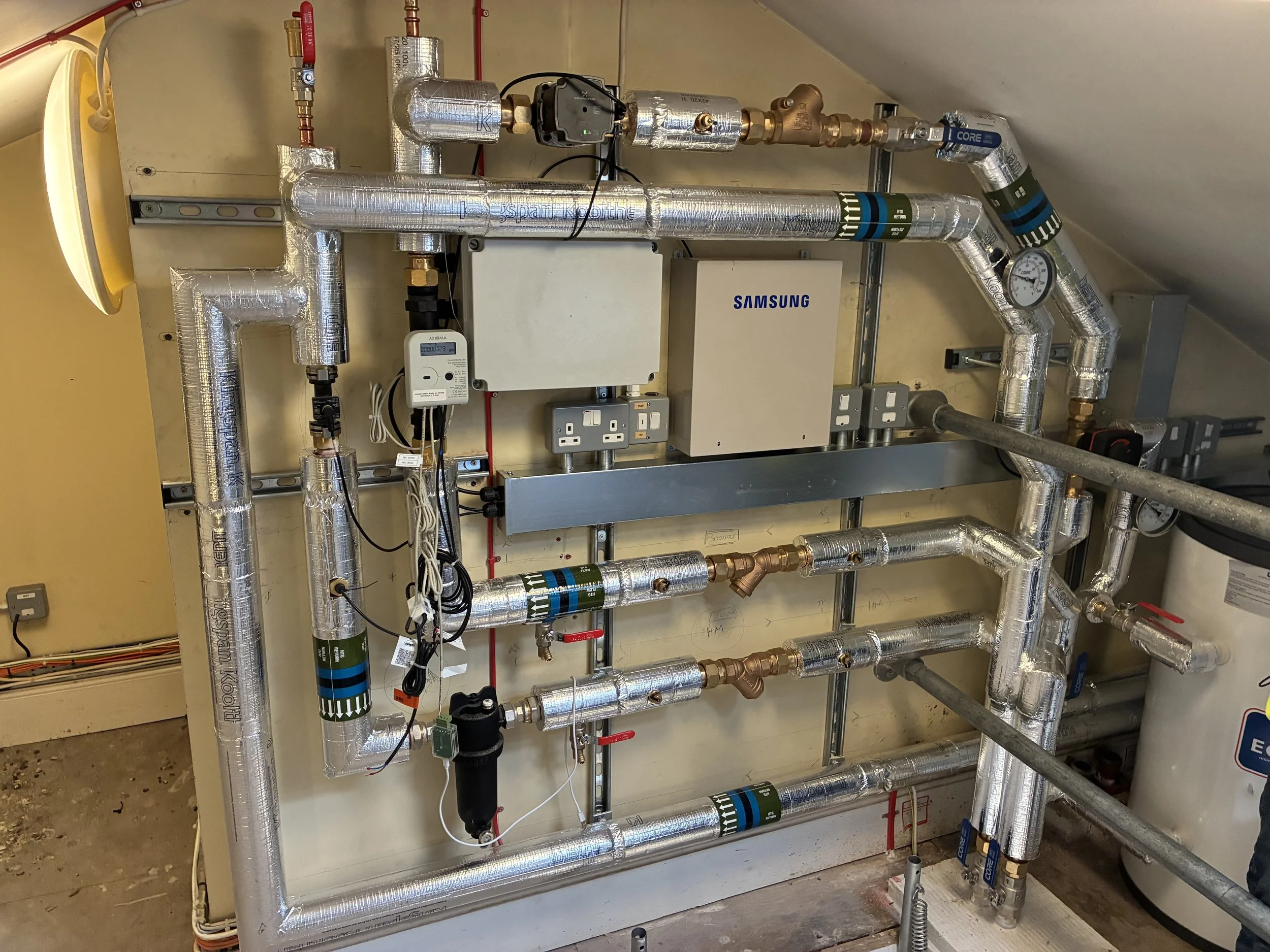
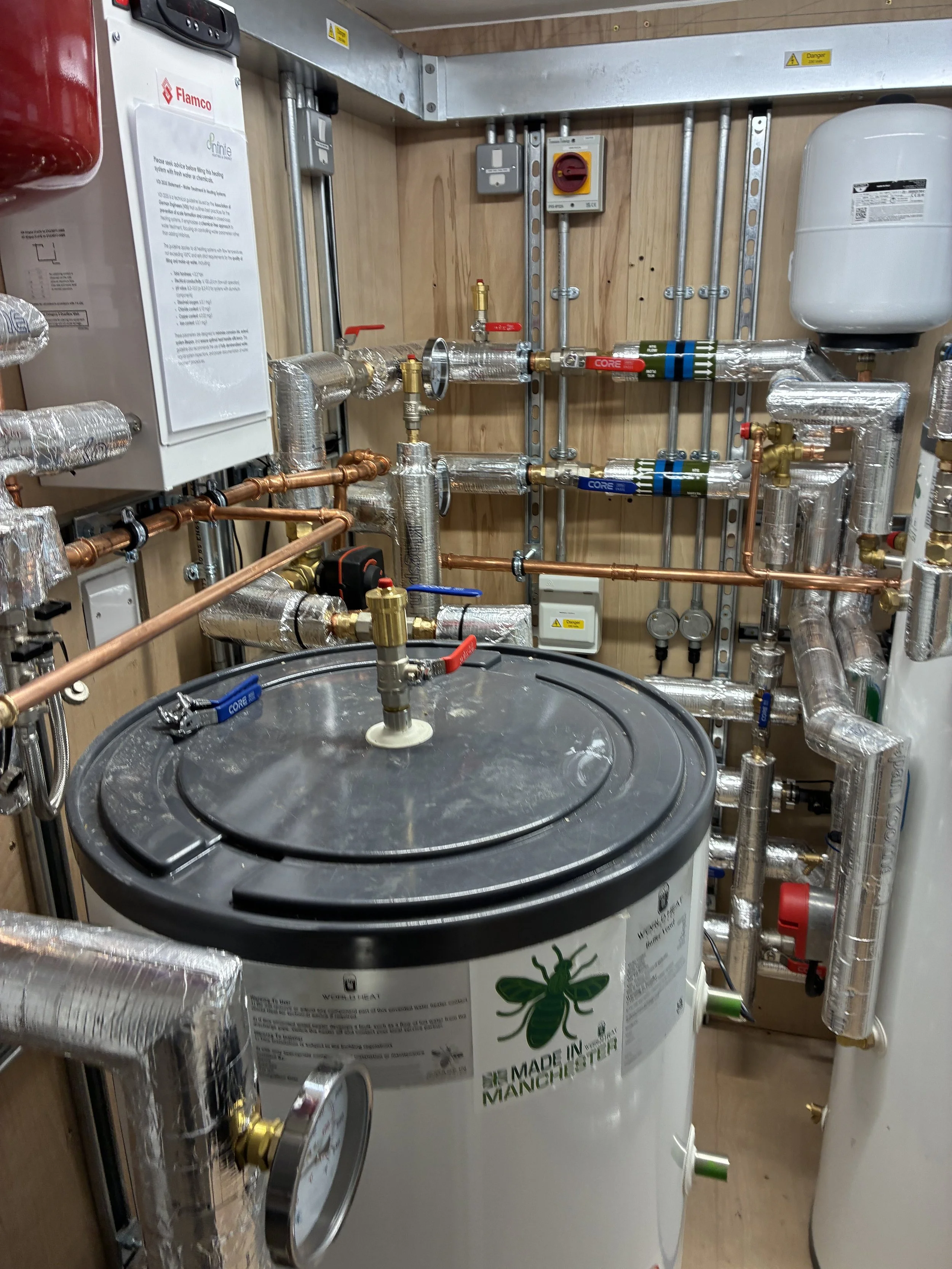
Six individual decarbonisation projects are planned across the Pearce Hostel site. This first phase involves retrofitting two hostels with domestic-scale air-source heat pump systems to replace existing gas boilers. JGC developed detailed technical designs focused on minimising intervention in the existing fabric wherever possible, preserving the hostels’ historic character while enabling practical delivery of new, efficient heating systems. Heat pump solutions were selected to balance operational efficiency, installation feasibility, and ease of integration with existing building structures and services, while also considering architectural and acoustic sensitivities.
The second phase of the decarbonisation works will replace the remaining gas boiler plant rooms across the site. Due to the site’s constrained location in the centre of Cambridge, solutions have been developed that utilise multiple smaller heat pumps connected in cascade arrangements to meet the building's demand. This approach provides inherent redundancy and will de-risk the installation strategy when site access for installing new equipment is highly constrained.
Works have been undertaken on a hostel-by-hostel basis as part of a phased delivery programme. The first phase of the decarbonisation works for Hostels C Annexe and E was completed in 2025. The second phase of the works, consisting of the remaining hostels, is scheduled for 2026.