
Gwen Raverat House,
Darwin College
Decarbonisation and retrofit following a phased delivery programme
Client: Darwin College
Status: Completed
OVERVIEW
The project involved the decarbonisation and re-supply of the heating and hot water systems at Gwen Raverat House, a multi-occupancy student accommodation building in central Cambridge. JG Consulting were appointed to develop a strategy and design to replace the heating and hot water systems with air-source heat pumps. Alongside the project architect, JG Consulting assisted the client in preparing and submitting a Public Sector Decarbonisation Scheme (PSDS) application.
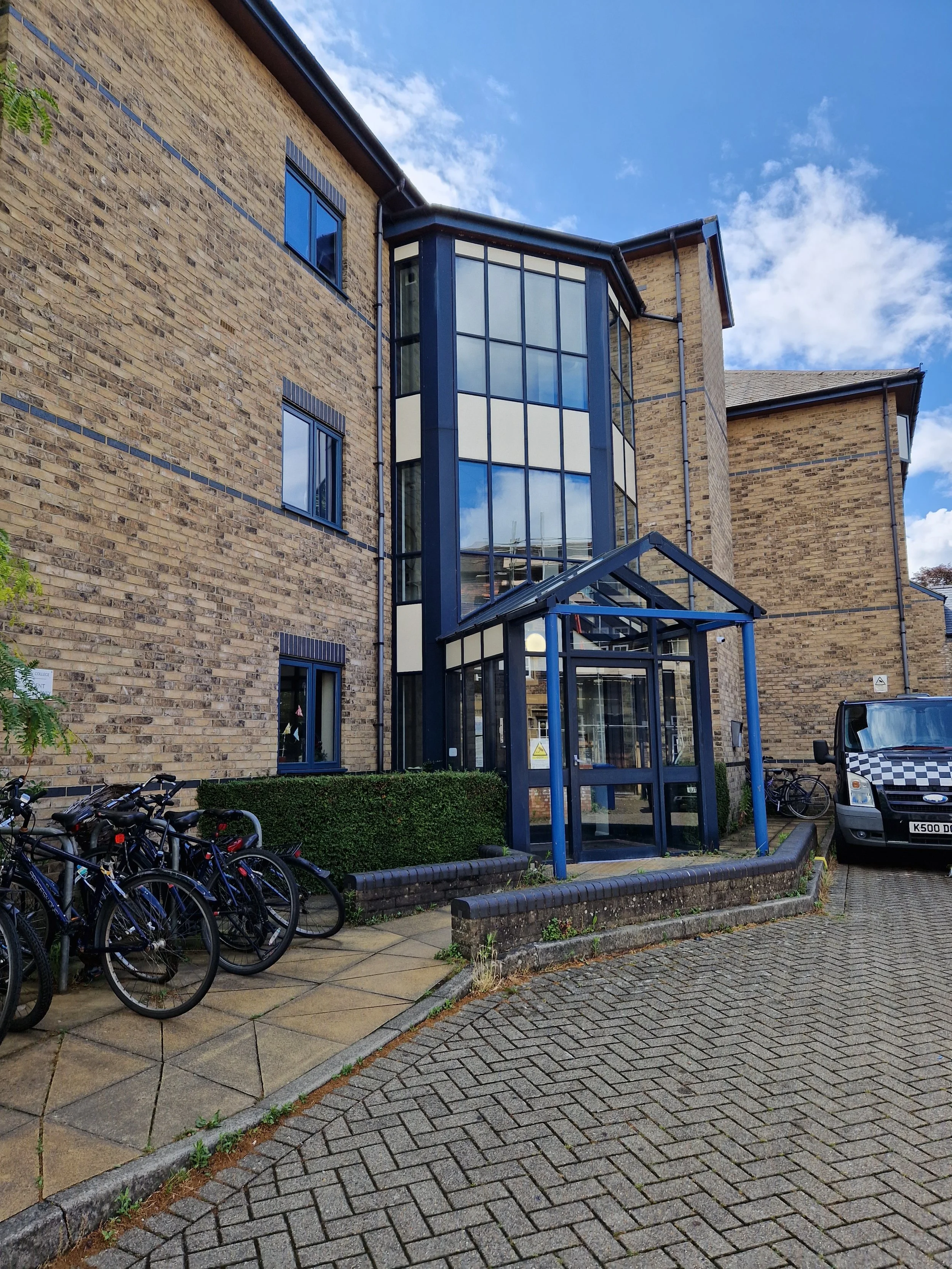
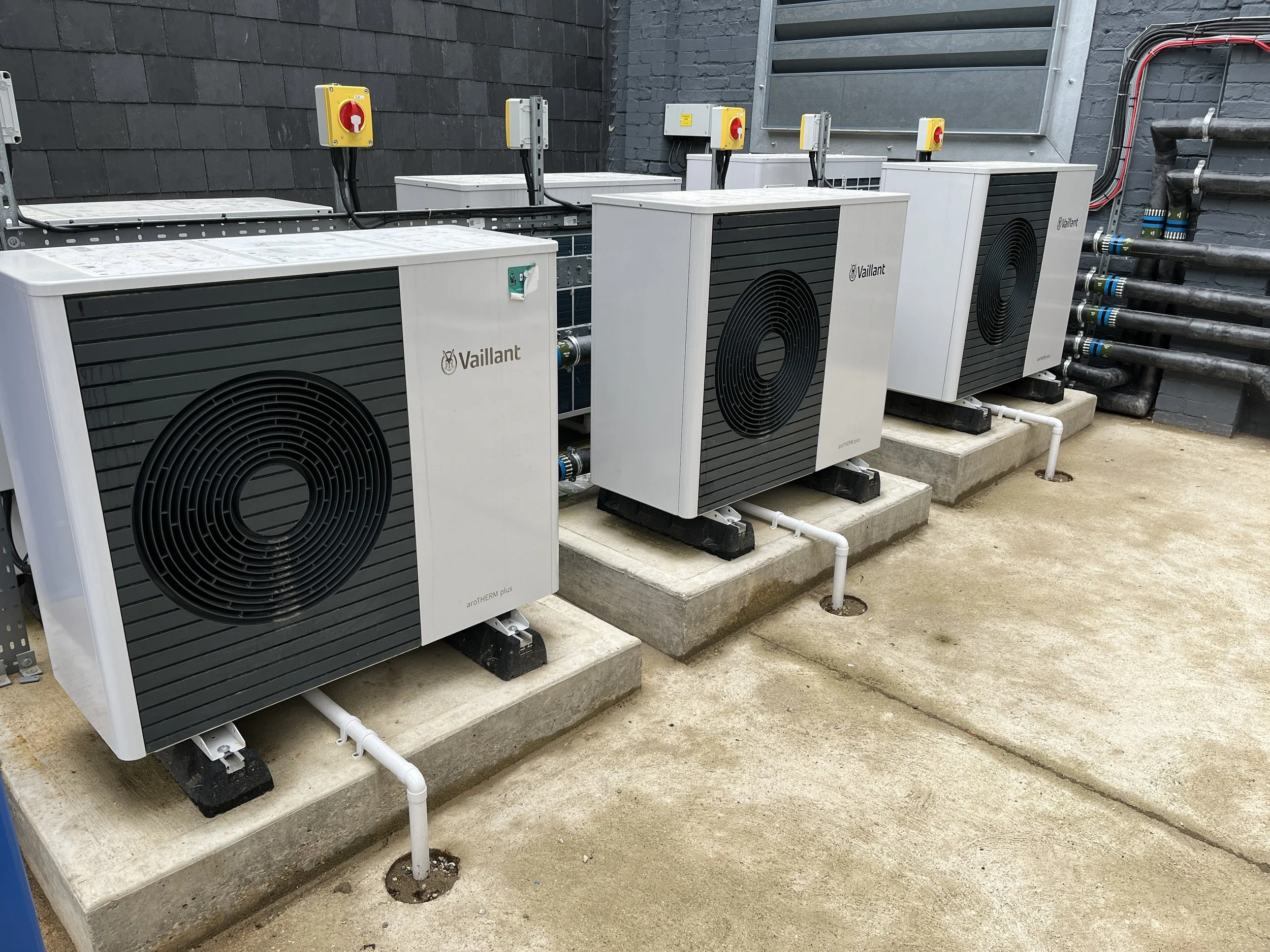
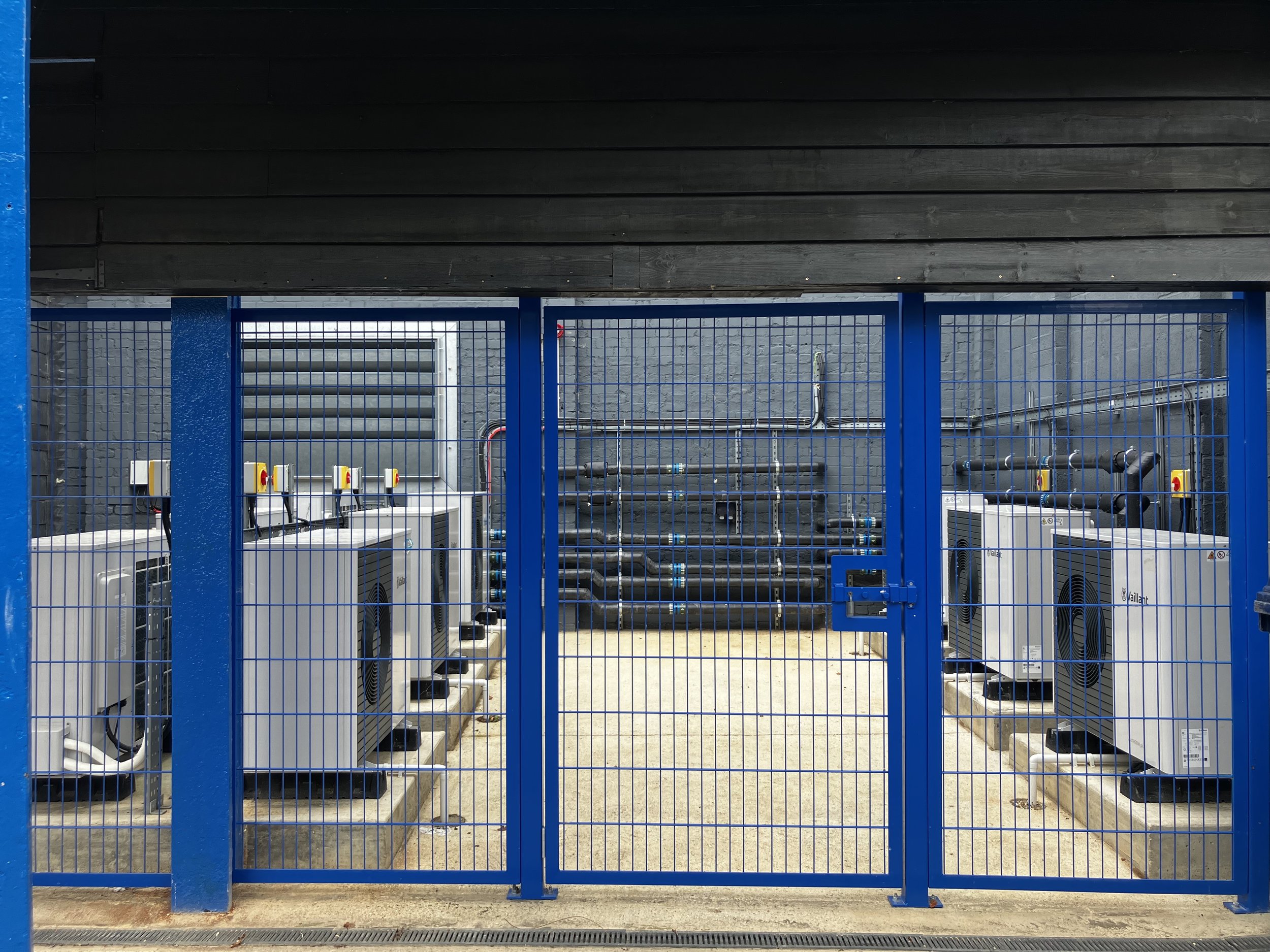
The building, constructed in the 1990s, comprises three floors of student accommodation, featuring communal bathrooms and kitchen spaces. The previous general layout and servicing strategy consisted of nine distinct clusters, each with its own kitchen, gas boiler and hot water cylinder. To minimise disruption to internal services and the extent of the work required, this decentralised approach was retained, with each boiler system replaced by a dedicated air-source heat pump on a like-for-like basis. This enabled the works to be completed in phases by replacing one boiler system at a time, allowing the other kitchen clusters to remain occupied while works took place. The heat pumps were installed in a centralised external enclosure remote from the building.
Alongside the installation of heat pumps, the building's fabric was improved through upgrades to the existing windows & doors and installation of enhanced loft insulation.
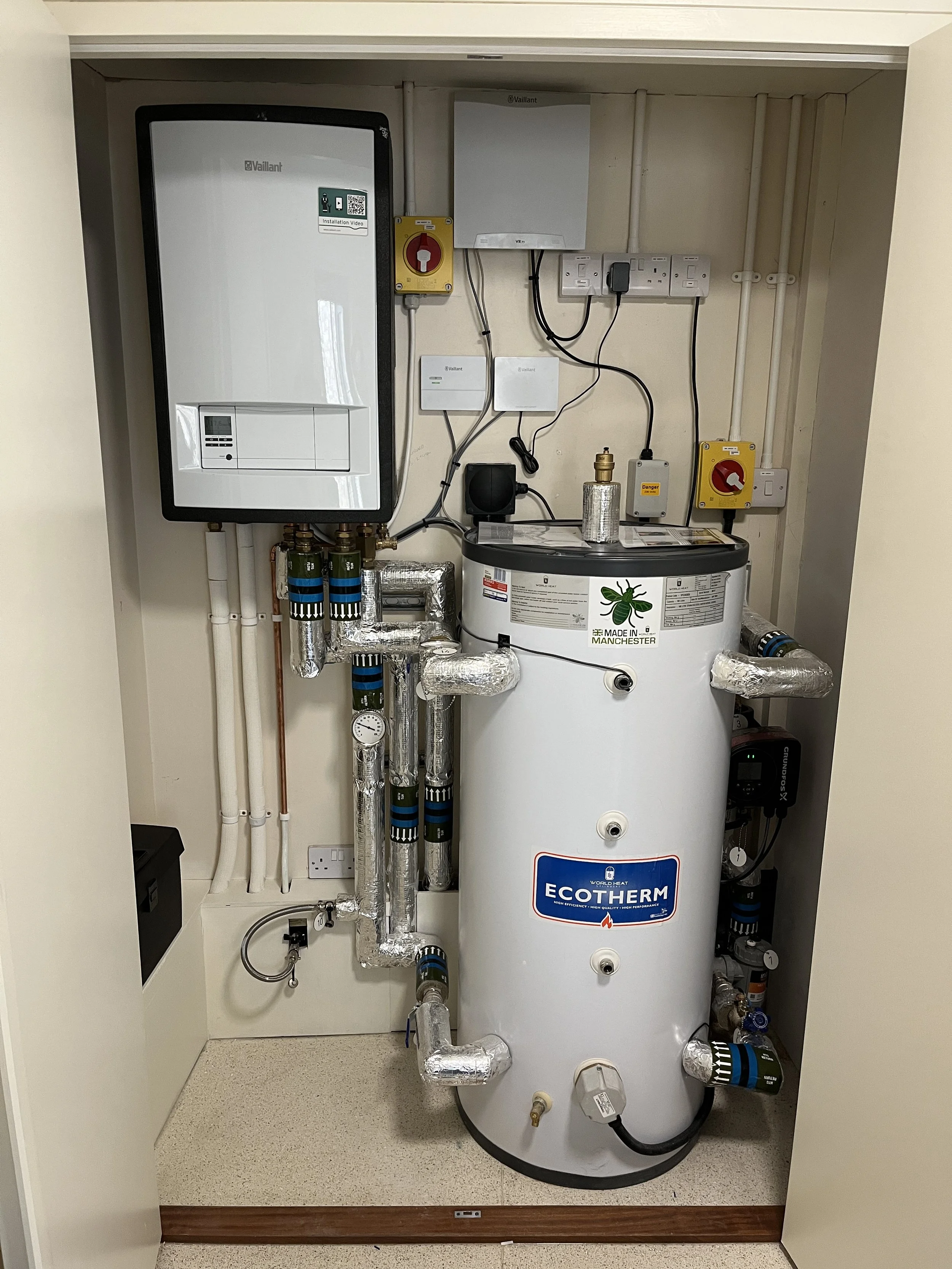
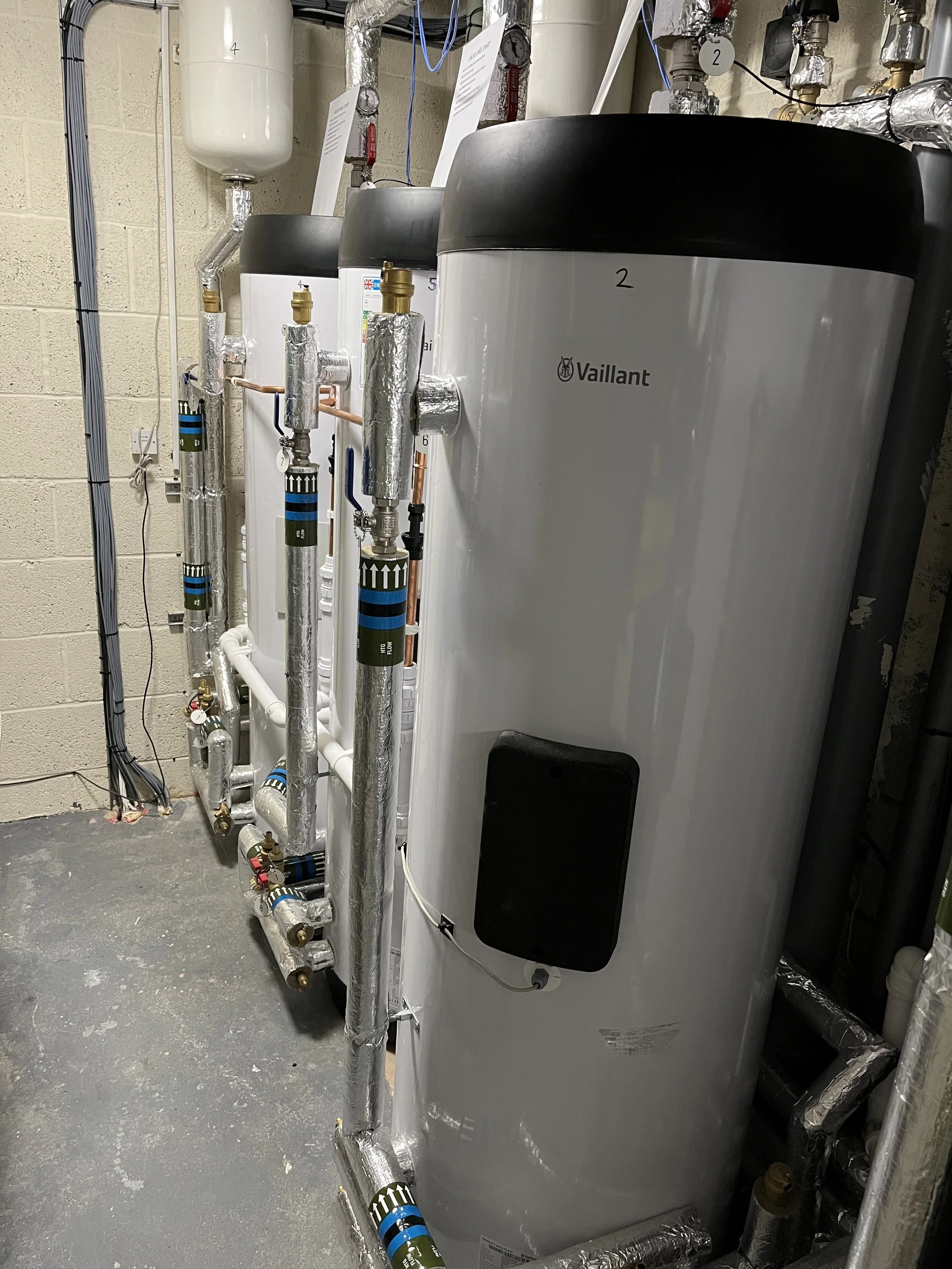
To enable the heat pumps to operate efficiently, radiators were replaced in all bedrooms, kitchens, and bathrooms, and hot water cylinders were upgraded. To reduce project costs, the distributed heating and hot water pipework running throughout the building in ceilings and risers was retained and re-served from the heat pump systems.
The scheme was completed as a phased handover, with each kitchen completed and re-occupied sequentially. The final kitchen was completed and handed over in 2025.