
Erasmus Building, Queens’ College
Deep Retrofit and Decarbonisation
Client: Queens’ College, Cambridge
Status: Completed
OVERVIEW
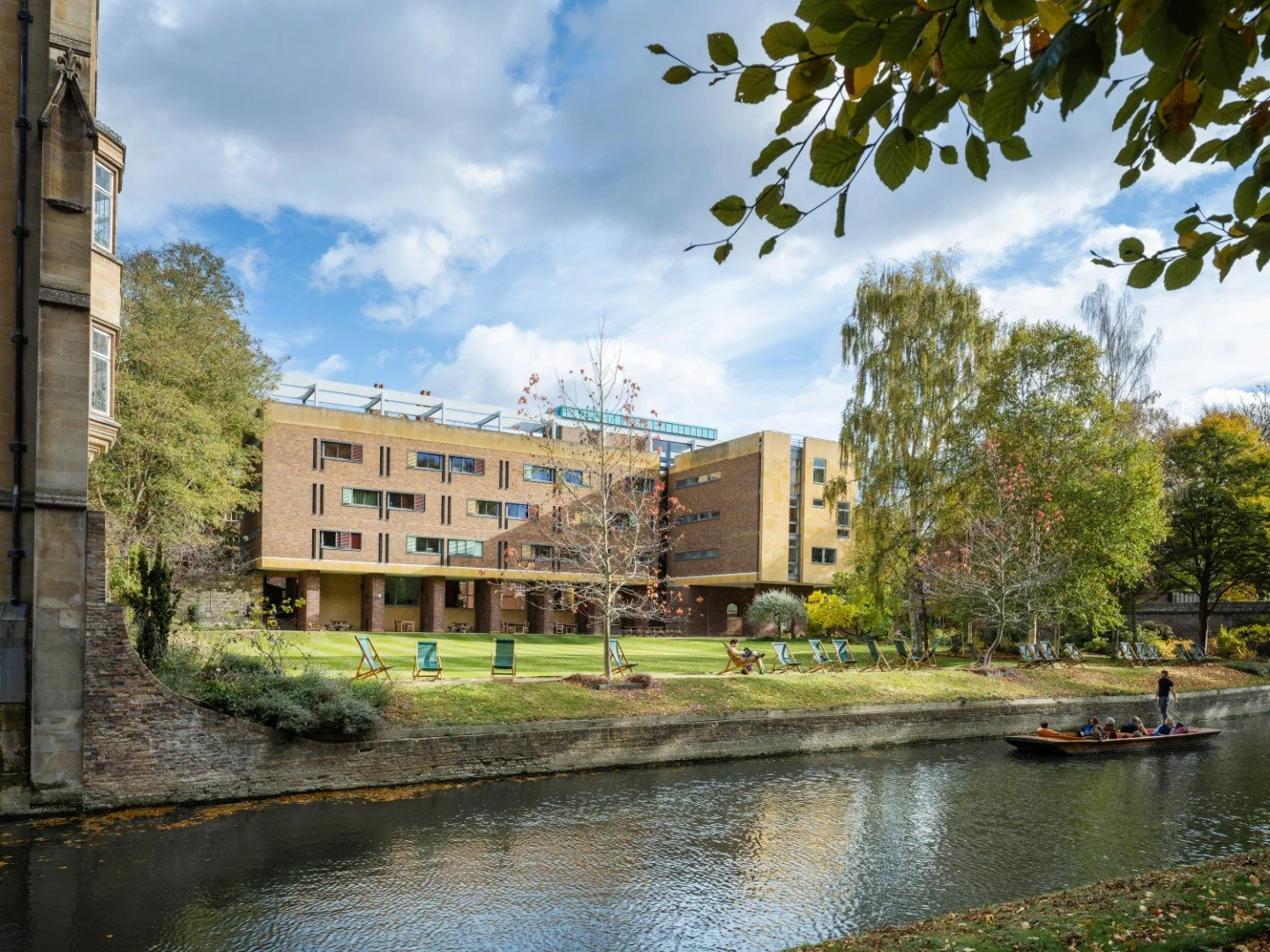
The Erasmus Building at Queens’ College, Cambridge, initially designed by Sir Basil Spence, is a listed student accommodation block which occupies a prominent position on the River Cam. The project started as a simple refurbishment but evolved into the cornerstone of the college’s wider decarbonisation master plan and a significant first step.
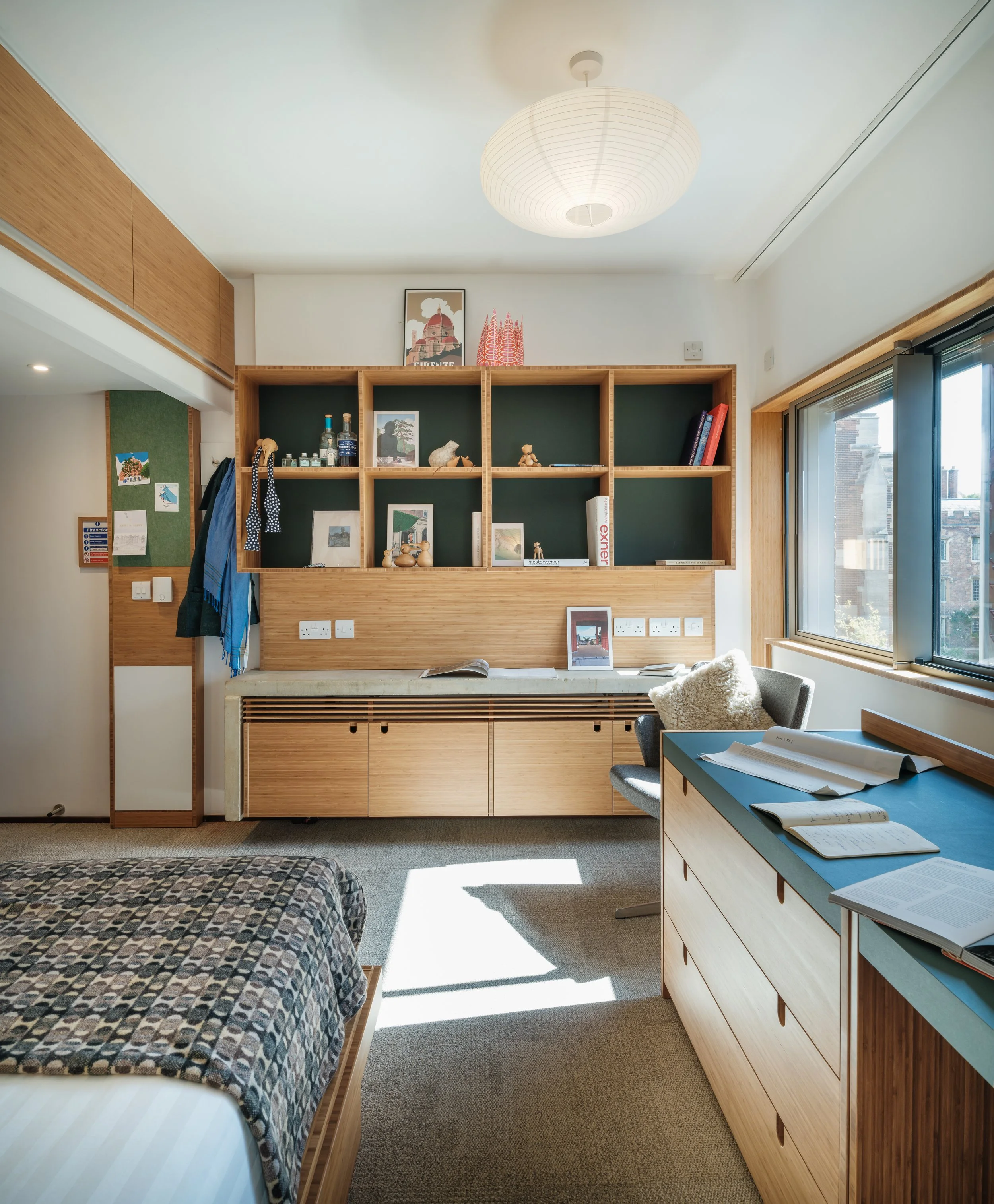
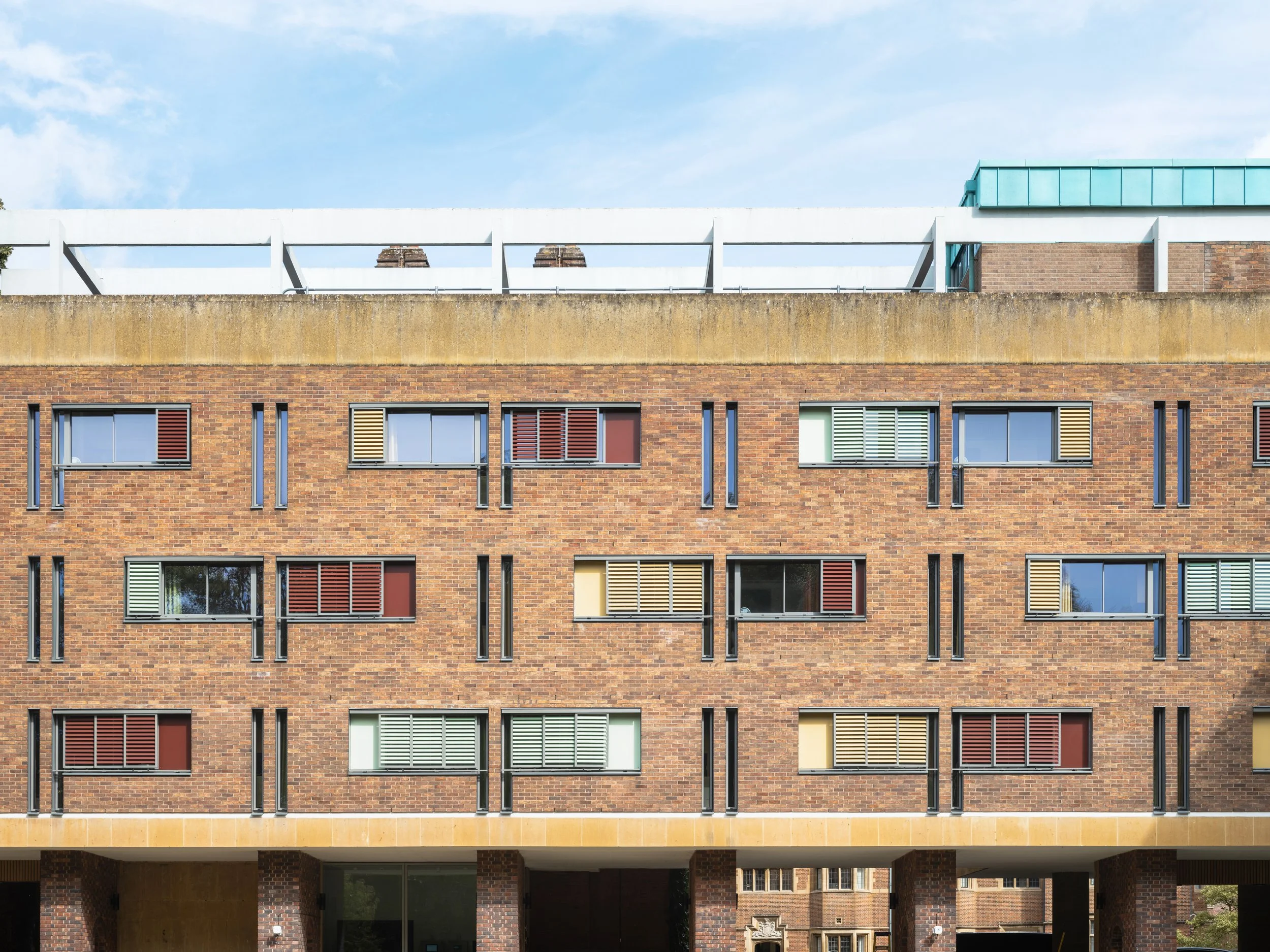
The building underwent a complete deep retrofit to re-provide 43 student rooms, along with associated gyps and supervision spaces. Innovative material use, such as Aerogel, allowed the building's original detailing and character to be retained whilst drastically reducing its energy demand.
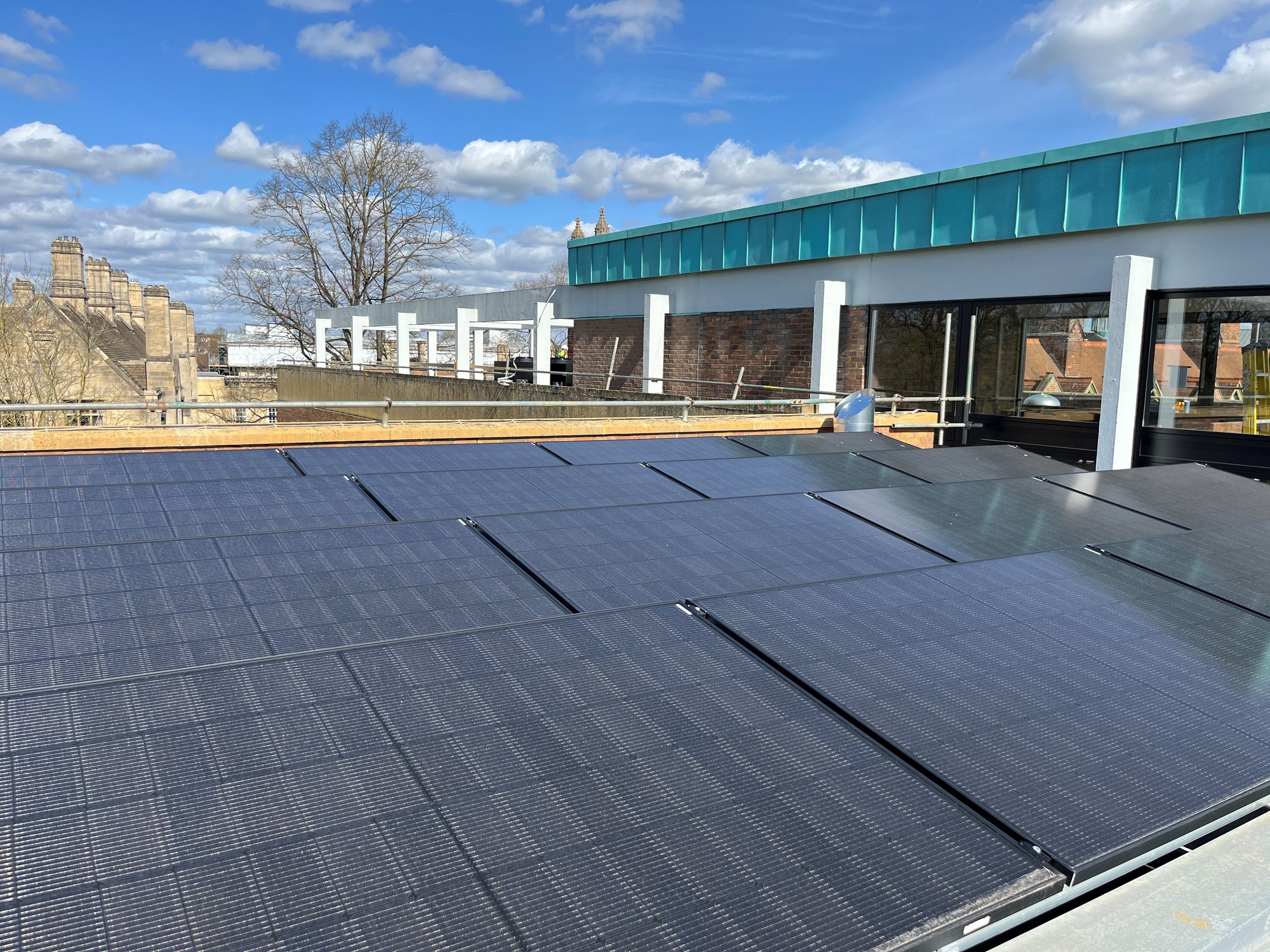
JGC were involved from the early stages and were instrumental in helping the college successfully apply for SALIX funding. The scheme also obtained planning consent for the roof to be used to incorporate a higher-capacity air-exchange array in the future as part of the wider decarbonisation masterplan, allowing more low-carbon heating systems to be installed and connected at a later date to serve other areas of the site using interconnecting pipework.
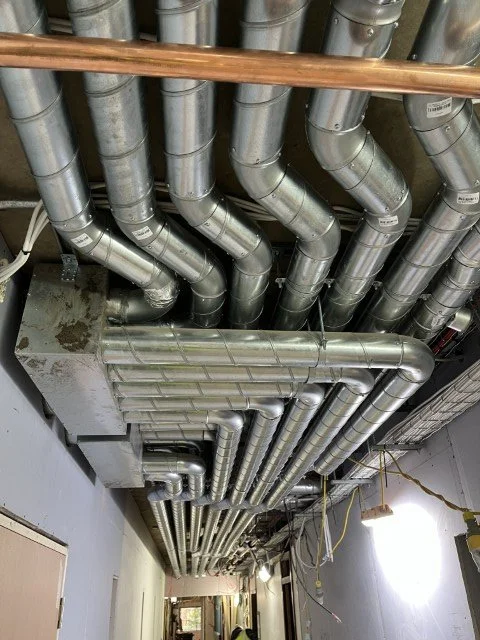
The scheme utilised air source heat pumps and innovative design strategies, such as external shutters, radial distribution ductwork from MVHR systems, and radial hot water pipework, to reduce its energy demand by over 90% against its previous base level. The air source heat pump system also provides ‘light cooling’ via the same heating infrastructure, providing enhanced summer comfort while minimising material use and up-front cost. External shutters have been supplied to the West and South-facing bedrooms. Once shut, fan-assisted radiators provide cooling to bedrooms, keeping the building comfortable during severe heat waves.
To deliver this complex and ambitious project, JGC undertook Stage 4 technical design in Revit to ensure that all MEP services were accurately coordinated using 3D design software prior to construction and worked closely with the MEP contractor to address the challenges that arose during construction.
Following an ambitious 54-week programme, the project was completed in April 2025 and shortlisted for the 2026 Greater Cambridge Design and Construction Awards Best Conservation, Alteration, or Extension of an Existing Building over £3M award. The scheme has also been used by Historic England as a case study in achieving effective overheating mitigation in historic buildings.