
Clare College, Lerner Court
Combined air and ground source heat pumps to serve accommodation and teaching spaces
Client: Clare College
Status: Completed
OVERVIEW
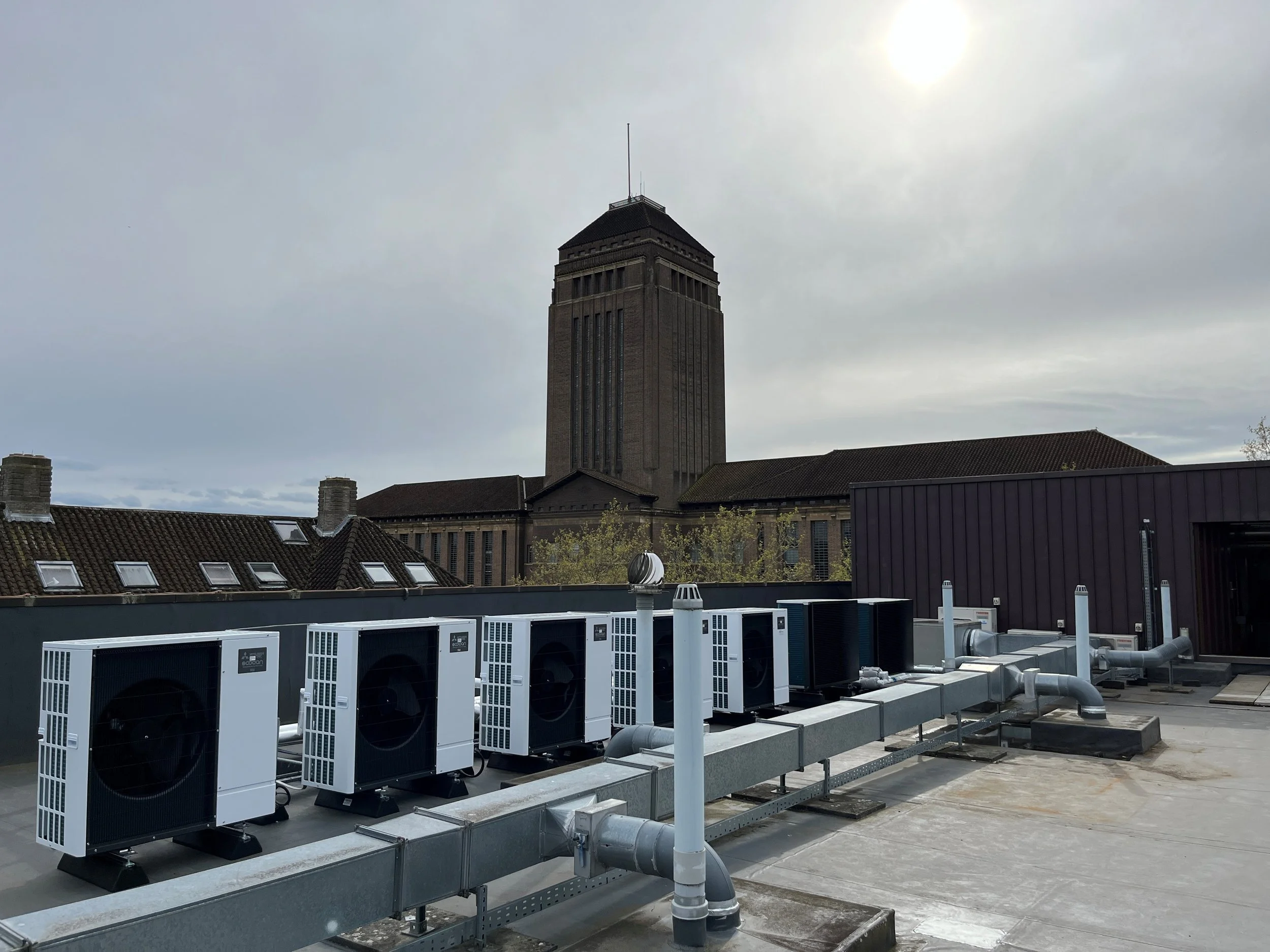
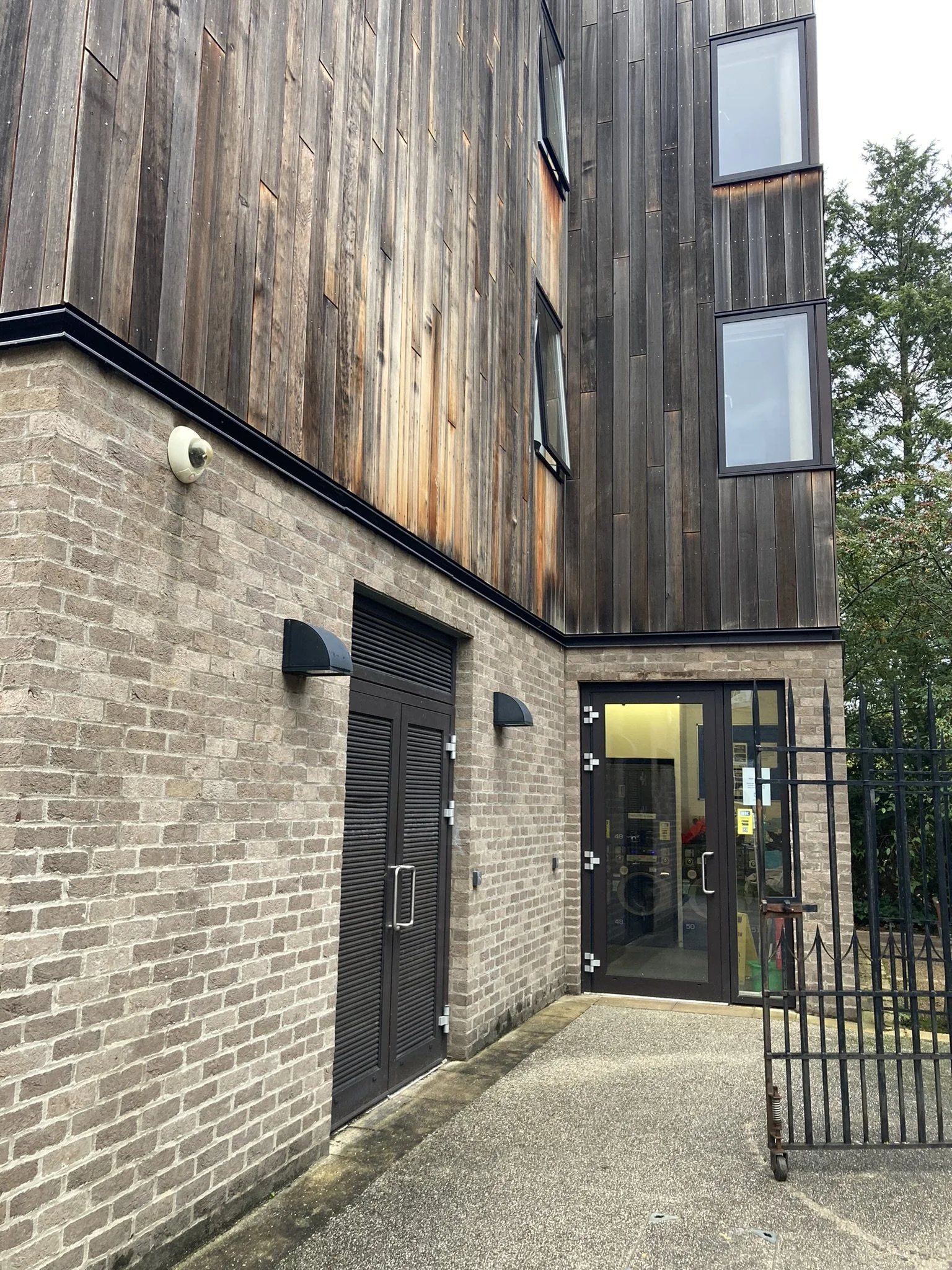
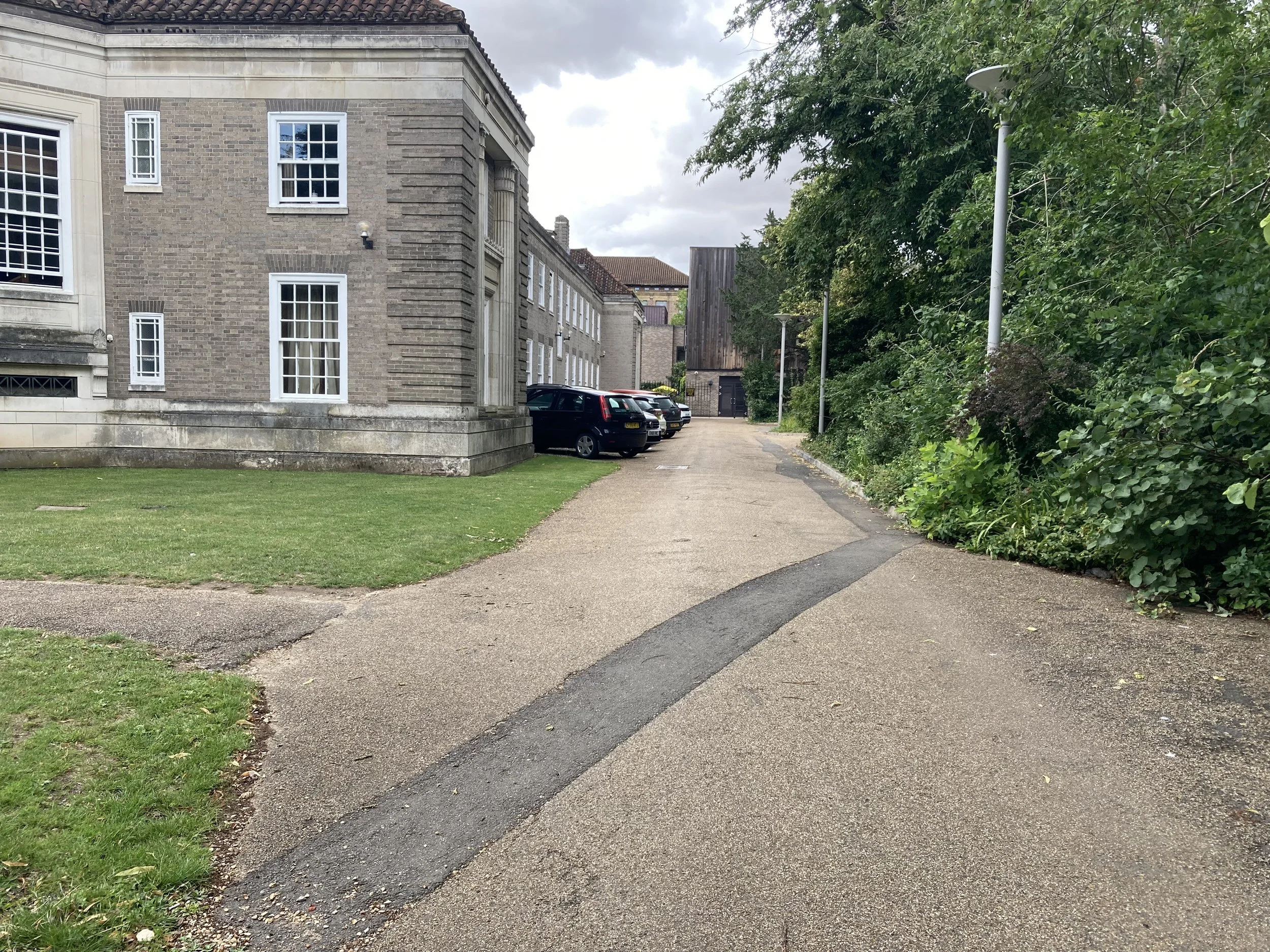
The Gillespie Centre and Lerner Court are a combined set of buildings comprising mixed academic and student accommodation. JGC were appointed to develop a strategy for re-supplying space heating and hot water to the building, utilising air and ground source heat pumps. The project was completed in two phases, with phase 1 focusing on a new air source heat pump array to re-supply Lerner Court and phase 2 involving reconfiguration of the existing ground source system supplying the Gillespie Centre.
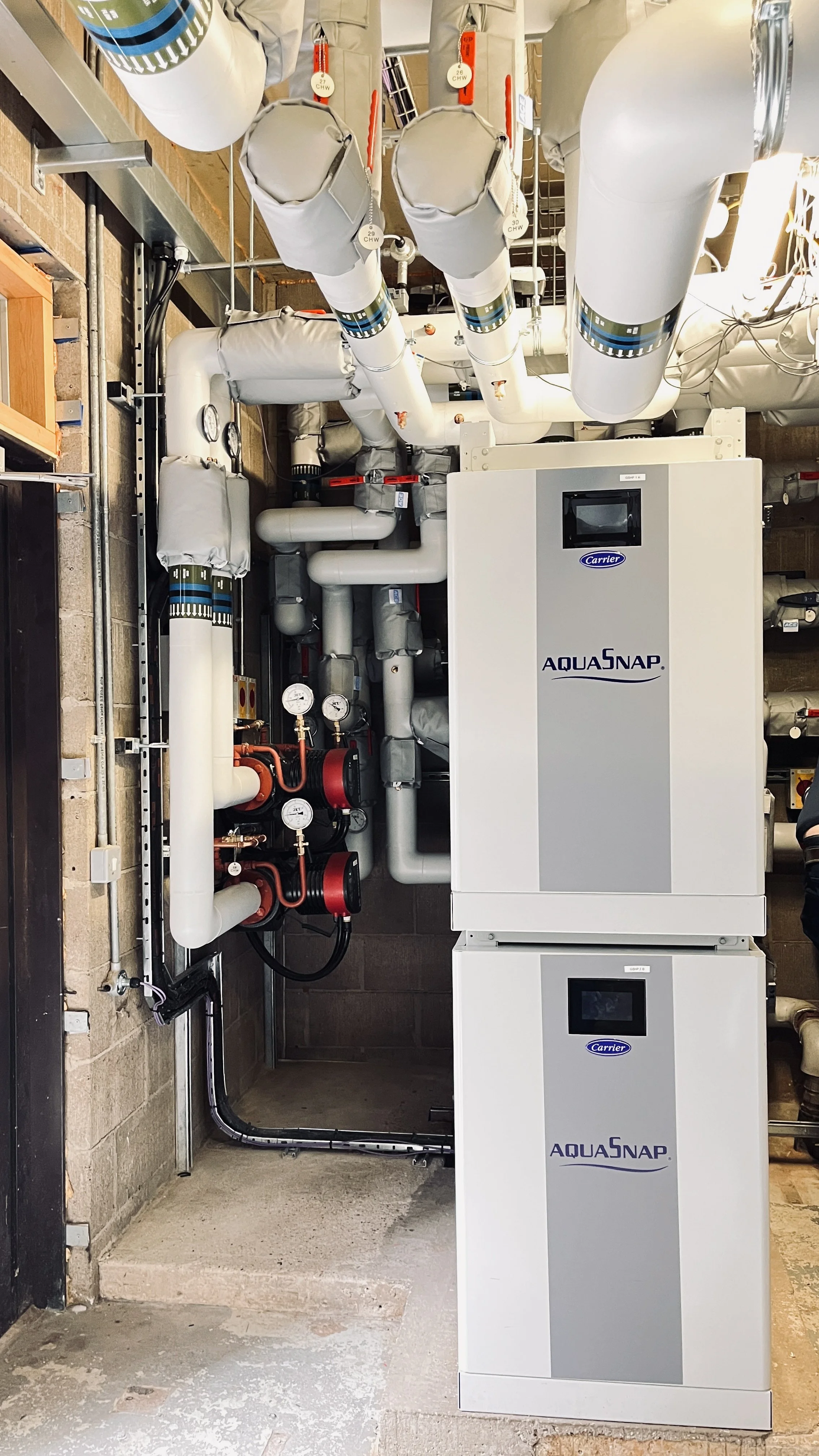
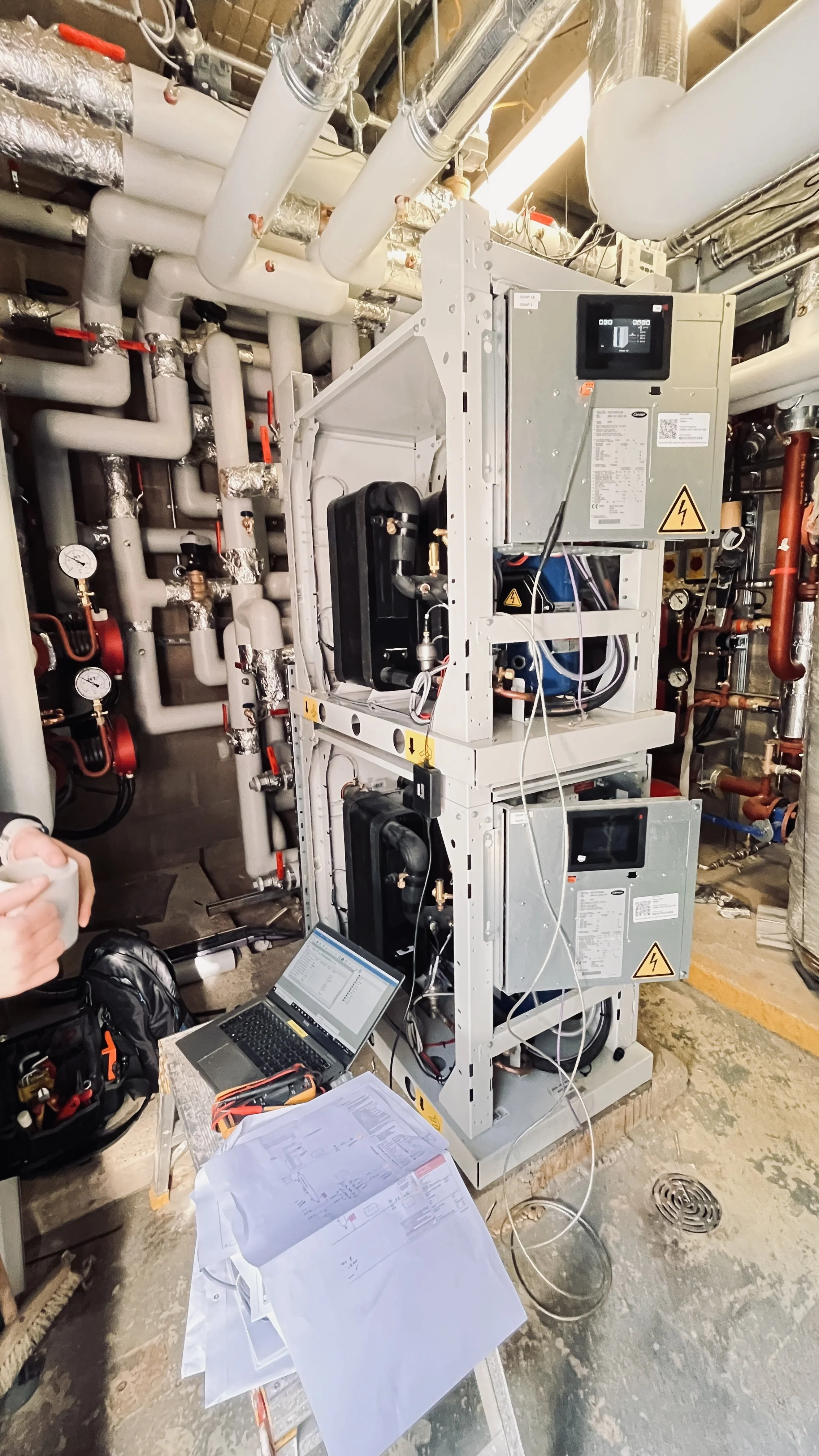
During phase 1, space heating and hot water were re-supplied to student accommodation using separate air source heat pump systems. For space heating, an array of domestic-scale air source heat pumps mounted on the roof of Lerner Court was configured to meet the building's heat demand. This ‘cascade’ heat pump approach ensured high levels of redundancy, with the array designed to accommodate the loss of a single heat pump during required maintenance or replacement. Separate heat pumps were installed to re-supply domestic hot water, allowing the space heating and hot water heat pump systems to be run independently, at optimised delivery temperatures for improved efficiency.
The project involved a complete reconfiguration of the roof plant room to accommodate new equipment. The building's internal pipework serving radiators and other room emitters was retained to avoid disruption to living spaces on the lower floors. Constraining the project scope in this way also allowed the retrofit's core elements to be completed within a short one-month timeframe.
Phase 2 of the project involved the complete replacement of the building’s existing ground source heat pump system, supplying heating and cooling to the Gillespie Centre academic and conference facilities. Hydrogeological testing of the existing ground-loop boreholes was completed to determine the thermal energy available in winter for heating and the heat-sink capacity in summer for cooling. New heat pump compressor equipment was installed to supply the building's heating and cooling circuits, along with new fan coil units in the rooms.
Phase 1 was completed in 2024, with phase 2 following in 2025. The client's early evaluation and monitoring of the new systems indicate that the latest heating and hot water systems have resulted in substantial energy and operational cost savings since installation.